
READ THE FULL LEXX RESEARCH REPORT
As Lexaria Bioscience Corporation (NASDAQ: LEXX) extends its Material Transfer Agreement (MTA) with an undisclosed pharmaceutical company, it is launching other studies to expand the data set for DehydraTECH with GLP-1 agonists. This includes two animal studies and human pilot study #7. The animal studies will look at a variety of DehydraTECH (DHT) formulations that include cannabidiol, semaglutide (sema), along with next-generation GLP-1 agonists to identify the pharmacokinetic (PK) and safety profiles of these drugs. To communicate Lexaria’s progress, CEO Rich Christopher has participated in several video interviews that provide additional detail on the company’s goals and achievements.
Animal Studies
Animal Study #1
An April 15th press release announced the engagement of a contract research organization (CRO) to execute and report on a new animal study designated GLP-1-A26-1. It will evaluate a number of formulation enhancements with DHT-sema and DHT-cannabidiol (CBD). The study is expected to begin dosing around mid-June. Initial design parameters include the use of Sprague-Dawley rats as the animal model and eight to 11 separate arms evaluating different compositions seeking to achieve diabetes control. Following administration of the composition, blood samples will be taken at multiple timepoints to evaluate its pharmacokinetic performance and concentration in the brain tissue. Previous work with the underlying active pharmaceutical ingredient (API) will be used as a baseline of comparison for the study results. Salcaprozate sodium (SNAC)[1] will be evaluated as part of the DHT formulations. It has shown favorable results in previous studies by Lexaria compared with non-SNAC formulated inputs.
Animal Study #2
An April 23rd press release introduced Animal Study #2, designated GLP-1-A26-2. This evaluation will look at two of the next generation GLP-1 agonist products, amycretin and retatrutide, and their compatibility with DHT. Lexaria has hired a CRO to execute and report on this study. The goal of the work is to examine the compatibility of amycretin and retatrutide with the DHT formulation as well as evaluate the pharmacokinetic (PK) performance and tolerability. The study expects to evaluate 18 different arms that will test new DHT compositions. A June 9th press release announced that Animal Study #2 had begun. Previous studies have shown a better safety profile in DHT formulated compositions compared with the injected versions and improved bio-absorption compared with approved oral forms of GLP-1 products. We think data from this study could be available sometime this year.
Human Pilot Study #7
Lexaria will launch a new study called Human Pilot Study #7, designated GLP-1-H26-7. It will evaluate two DHT-sema compositions against Novo Nordisk’s Wegovy tablets. The study is expected to be a five-week evaluation, with three separate arms to assess safety, tolerability, and pharmacokinetics. It will compare SNAC-inclusive DHT-sema tablet and capsule formulations to commercially available Wegovy tablets, under fasted pre-dose conditions. This study is different from prior work in several ways. First, an oral tablet will be used for the DHT-sema composition rather than the previous capsule compositions. The tablet formulation is designed to adhere to the lining of the stomach in order to achieve targeted release of semaglutide in order to optimize absorption. Lexaria will formulate both of the interventions with the SNAC technology for extended use for the first time. The five-week duration of the evaluation is long enough for subjects to reach steady-state drug concentration. Previous work was limited by single-dose study designs that were shorter in duration.
On May 19th, Lexaria issued a press release announcing that it had received Independent Review Board (IRB) approval to begin human pilot study #7. Management expects that the results from the study will support further efforts with collaborators in the pharmaceutical industry that desire the improved convenience of oral delivery and the reduced adverse events that are associated with GLP-1 agonist products.
CEO Interviews
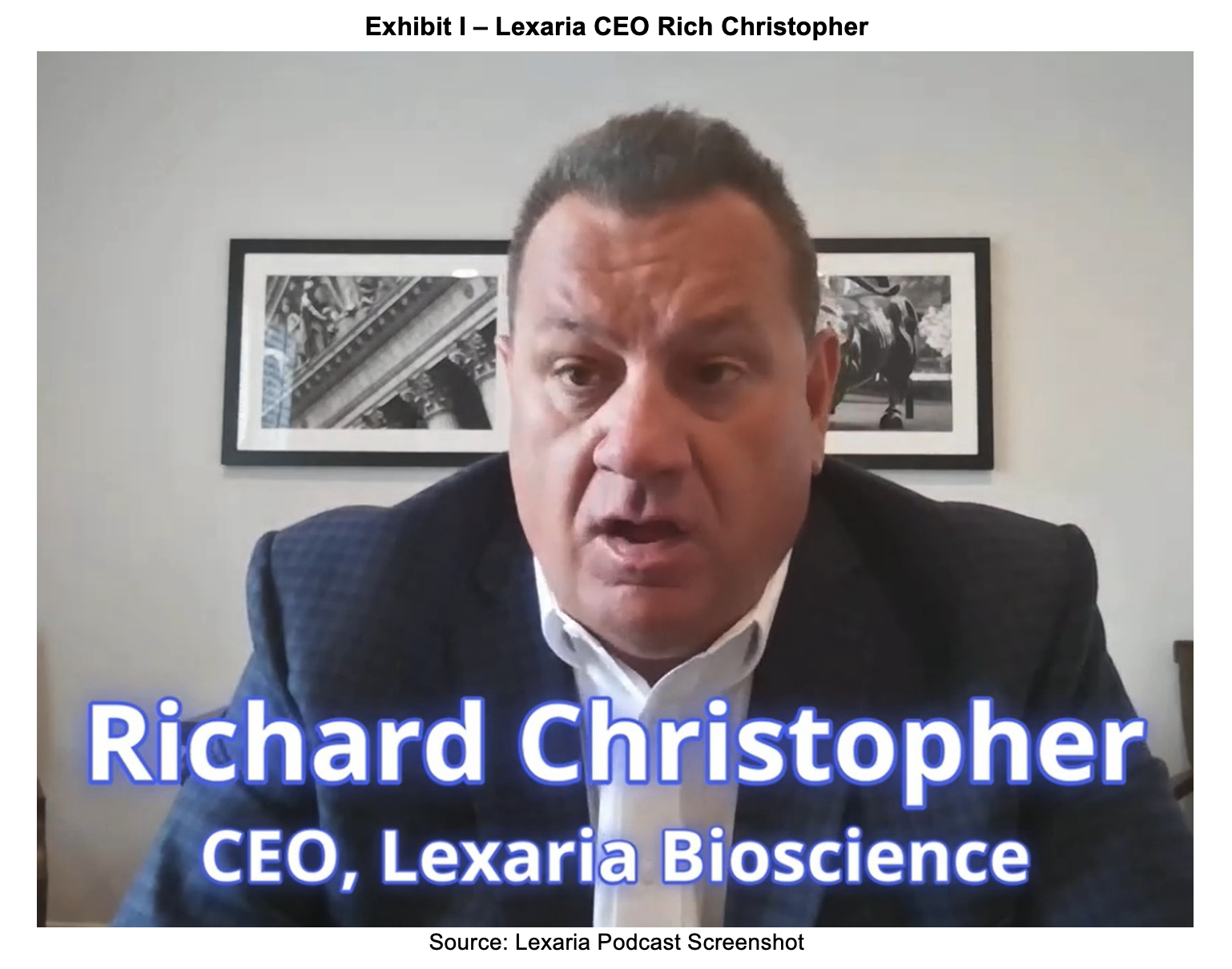
CEO Richard Christopher has participated in several video interviews to answer questions about Lexaria’s goals, objectives, and achievements. Below, we provide links to the most recent episodes.
New Patents
Lexaria updated its intellectual property (IP) profile in a March 26th press release. The company has added to several patent families that examine methods of treating hypertension, epilepsy, and diabetes. The new patents have been issued in the jurisdictions of Japan and Australia. Below, we list the patent families and the new IP issued.
- Compositions and Methods for Treating Hypertension
- Japan Patent 7823051, with term ending April 25th, 2043
- Japan Patent 7823052, with term ending April 25th, 2043
- Compositions and Methods for Treating Epilepsy
- Australian patent 2024205127 granted, with term ending February 20th, 2044
- Compositions and Methods for Treating Diabetes
- Australian patent 2025205229 granted, with term ending on December 3rd, 2044
- Australian Patent 2024394427 granted, with term ending on December 3rd, 2044
GLP-1-H25-5 Completion and Safety Data (Fifth Study)
Final data for Human Pilot Study #5 was released in a February 5th, 2026, press release. CEO Christopher concluded that it had achieved its primary safety and tolerability endpoint and that DHT-liraglutide was comparable to traditionally injected liraglutide. The final results follow the release of the primary results from the study on June 11th, 2025. We discuss the details of this study in a February 10th, 2026, report entitled Final Results from Pilot Study #5.
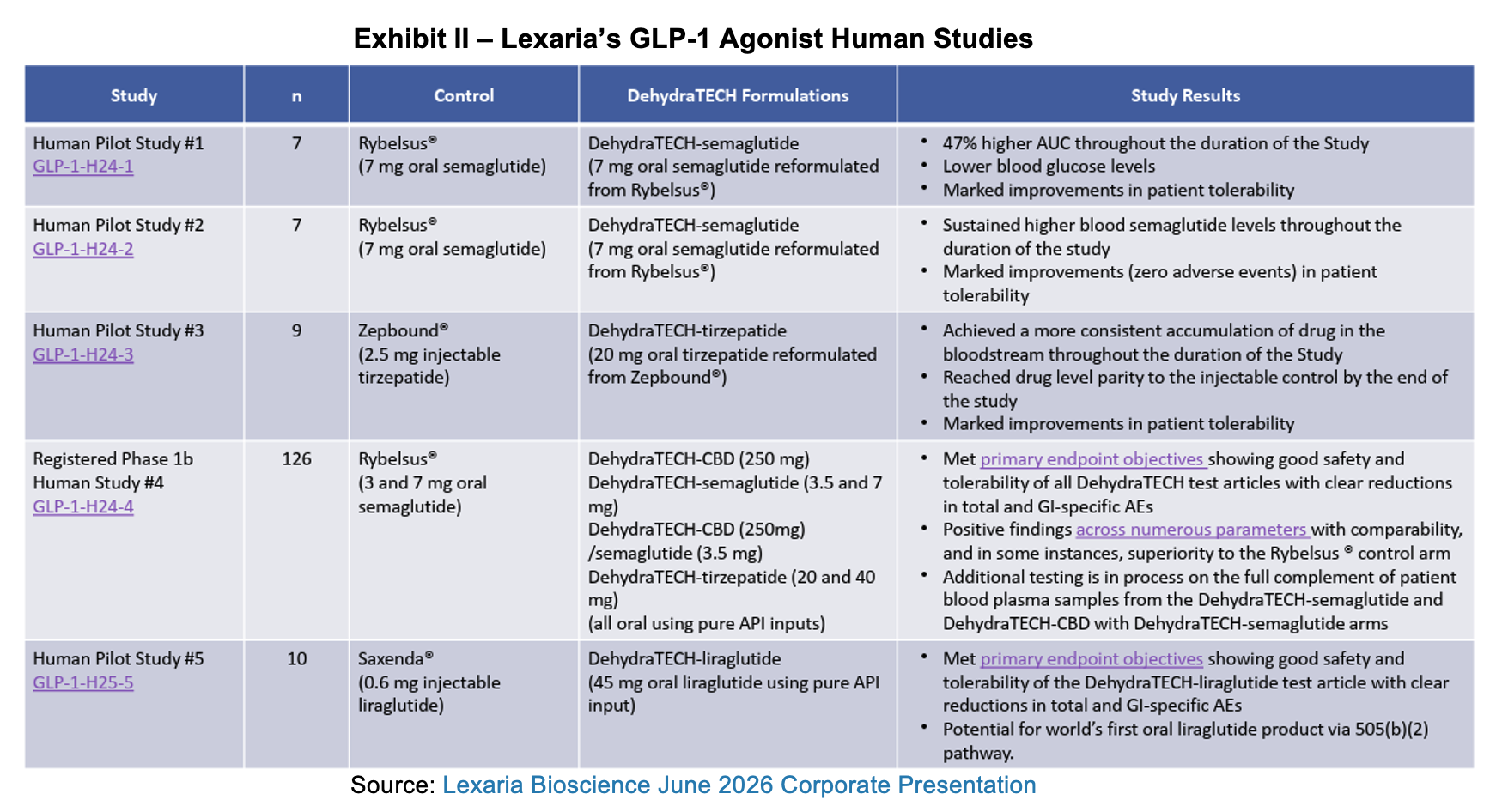
Lexaria will share the human and animal study data with its recently extended but undisclosed MTA partner, which has conducted other internal work on the DHT formulation. The extension will allow the two parties to continue sharing data from the new studies, maintain the exclusive license, and discuss strategic planning for the asset(s) under consideration.
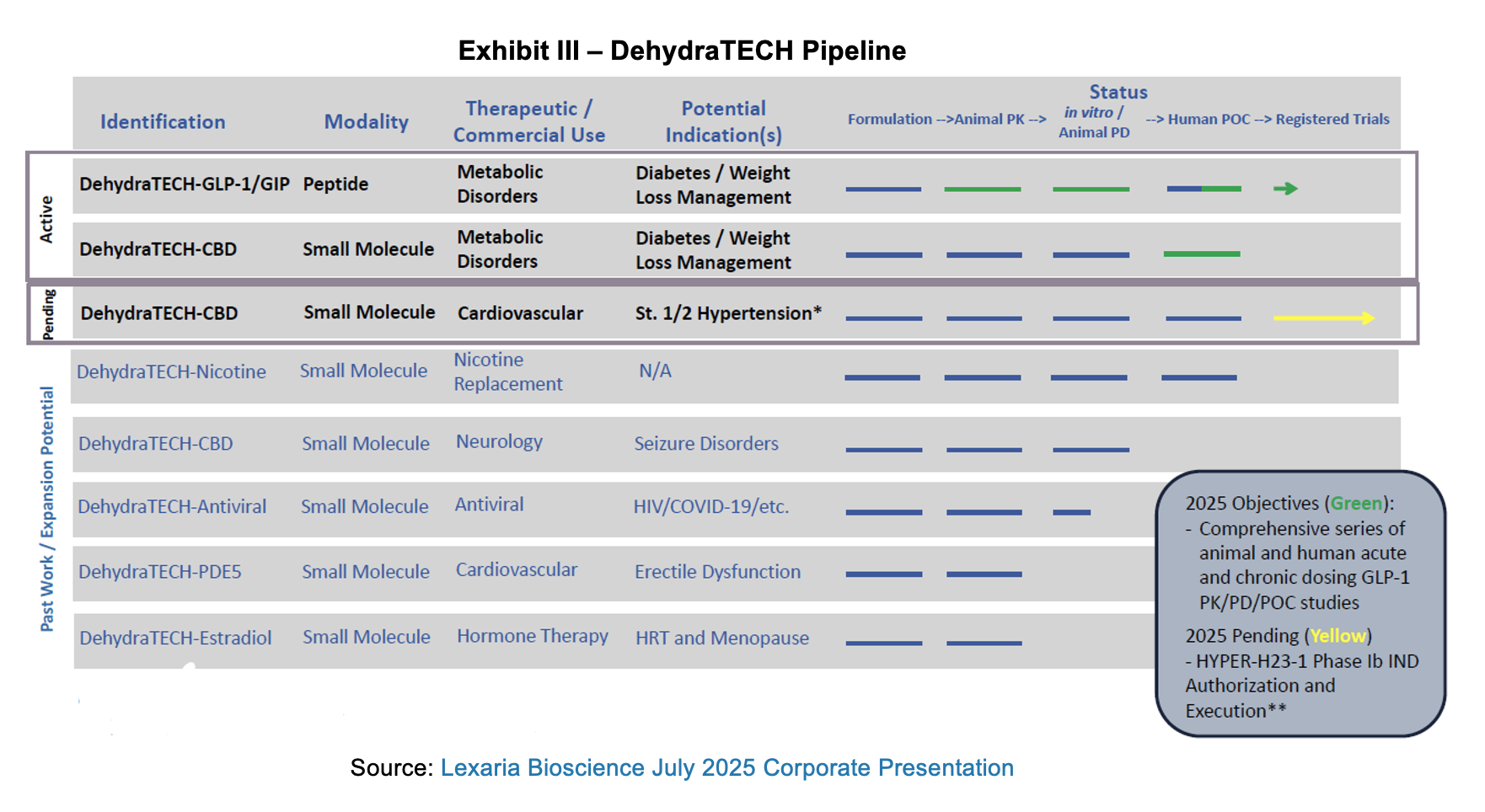
Pipeline
Milestones
- Results from Human Pilot Study #4 – December 2025
- Results from long term stability and mode of action characterization – 2025
- CEO Annual Letter – January 2026
- Lexaria annual meeting – January 27th, 2026
- Final results announced for Human Pilot Study #5 – February 2026
- Attendance at BIO International Convention – June 2026
- Start of animal study #2 (GLP-1-A26-2) – June 2026
- Conclusion of MTA – 1Q:26
- PK data readout from Human Pilot Study #5 – 1H:26
- Extension of GLP-1 agonist MTA agreement with pharmaceutical company – until December 31st, 2026
Summary
Lexaria begins animal and human studies to further evaluate candidates in the diabetes and weight loss space, particularly GLP-1 agonists. It is expanding the studies’ scope beyond semaglutide, tirzepatide, and liraglutide to evaluate next-generation candidates such as amycretin and retatrutide. Management is continuing efforts to execute a deal with its MTA partner and will share details from its work with them as the year progresses. Lexaria is reaching out to new prospects and will attend the BIO International Convention in San Diego later this month. CEO Christopher is also communicating with investors and stakeholders in several video interviews, included in this report. While progress has been limited for DehydraTECH to sign another arrangement, the platform offers a number of compelling features to prospective partners. DehydraTECH offers improved speed of onset, better bioavailability, reduced adverse events, and potentially a favorable regulatory pathway via 505(b)(2). The reduced level of adverse events shown in Lexaria’s human studies, especially GI tolerability, is a particularly attractive feature.
SUBSCRIBE TO ZACKS SMALL CAP RESEARCH to receive our articles and reports emailed directly to you each morning. Please visit our website for additional information on Zacks SCR.
DISCLOSURE: Zacks SCR has received compensation from the issuer directly, from an investment manager, or from an investor relations consulting firm, engaged by the issuer, for providing research coverage for a period of no less than one year. Research articles, as seen here, are part of the service Zacks SCR provides and Zacks SCR receives payments totaling a maximum fee of up to $50,000 annually for these services provided to or regarding the issuer. Full Disclaimer HERE.
________________________
[1] SNAC is a technological innovation that allows the protein-based medication semaglutide to be taken orally rather than by injection. Proteins and peptides (like semaglutide) are typically broken down in the digestive system before they can be absorbed, which is why most similar medications must be injected. SNAC works by creating a localized increase in pH around the drug molecule, protecting semaglutide from enzymatic degradation in the stomach, enhancing the permeability of the gastric mucosa and facilitating absorption of semaglutide through the stomach lining into the bloodstream. This technology was developed by Emisphere Technologies (later acquired by Novo Nordisk) and represents a significant advancement in oral delivery of peptide medications.