
READ THE FULL DWTX RESEARCH REPORT
Business Update
Positive Interim Results for Phase 2b Trial of Halneuron® in CINP
On December 22, 2025, Dogwood Therapeutics, Inc. (DWTX) announced positive interim results for the Phase 2b HALT-CINP (Halneuron® Treatment of Chemotherapy-Induced Neuropathic Pain) trial. Unblinded data from the trial was reviewed by the independent statistical review committee and concluded that Halneuron-treated patients are demonstrating separation from placebo-treated patients in pain improvement over the four-week study. The interim analysis included data from 97 patients that have completed treatment.
Based on the current pace of enrollment and the interim assessment results, we anticipate topline results from the trial in the third quarter of 2026. The trial is currently 80-85% powered to detect a Halneuron treatment difference based on current patient enrollment trends.
The Phase 2b trial is a four-week study that is examining the safety and efficacy of Halneuron in patients with moderate-to-severe CINP. The primary efficacy endpoint is the change from baseline at Week 4 in the weekly average of daily 24-hour recall pain intensity scores, which will be recorded in e-diary’s on participants smartphones. Secondary efficacy endpoints include Patient Global Impression of Change (PIGC), PROMIS Fatigue, PROMIS Sleep, PROMIS-29, Pain Interference, Hospital Anxiety and Depression Scale (HADS), and Neuropathic Pain Symptom Inventory (NPSI).
Background on Halneuron
Halneuron (tetrodotoxin, TTX), a sodium channel blocker, was originally discovered in the pufferfish and subsequent research has identified the toxin in 13 phyla (in both Eukarya and Bacteria) that includes both marine and terrestrial eukaryotes (Lago et al., 2015). As a natural poison, TTX is extremely effective and is the most potent non-peptide neurotoxin known. It blocks the influx of sodium through voltage-gated sodium channels (NaVs), thereby preventing the initiation and propagation of action potentials in almost all neurons and muscle cells (Stevens et al., 2011).
Mammals possess nine voltage-gated sodium channels, NaV1.1-NaV1.9. TTX binds to NaV1.1, NaV1.2, NaV1.3, NaV1.4, NaV1.6, and NaV1.7 (Nieto et al., 2012). NaV1.7 is expressed in all types of dorsal root ganglion (DRG) neurons, sympathetic neurons, Schwann cells, and neuroendocrine cells (Catterall et al., 2005). It is responsible for the perception of pain, which is supported by multiple lines of evidence. Individuals with loss-of-function mutations in the SCN9A gene (which encodes the alpha-subunit of NaV1.7) experience a complete inability to sense pain (Cox et al., 2006) while those with a gain-of-function mutation in SCN9A experience erythromelalgia (Dib-Hajj et al., 2005). In animal models, NaV1.7 nociceptor-specific knockout mice showed increased mechanical and thermal pain thresholds (Nassar et al., 2004). These results led researchers to hypothesize that TTX could be a potential therapeutic to control pain.
Halneuron Clinical Trials
Previous clinical trials investigating Halneuron include a Phase 2 cancer related pain (CRP) study and a Phase 2 CINP trial.
Phase 2 CRP Trial
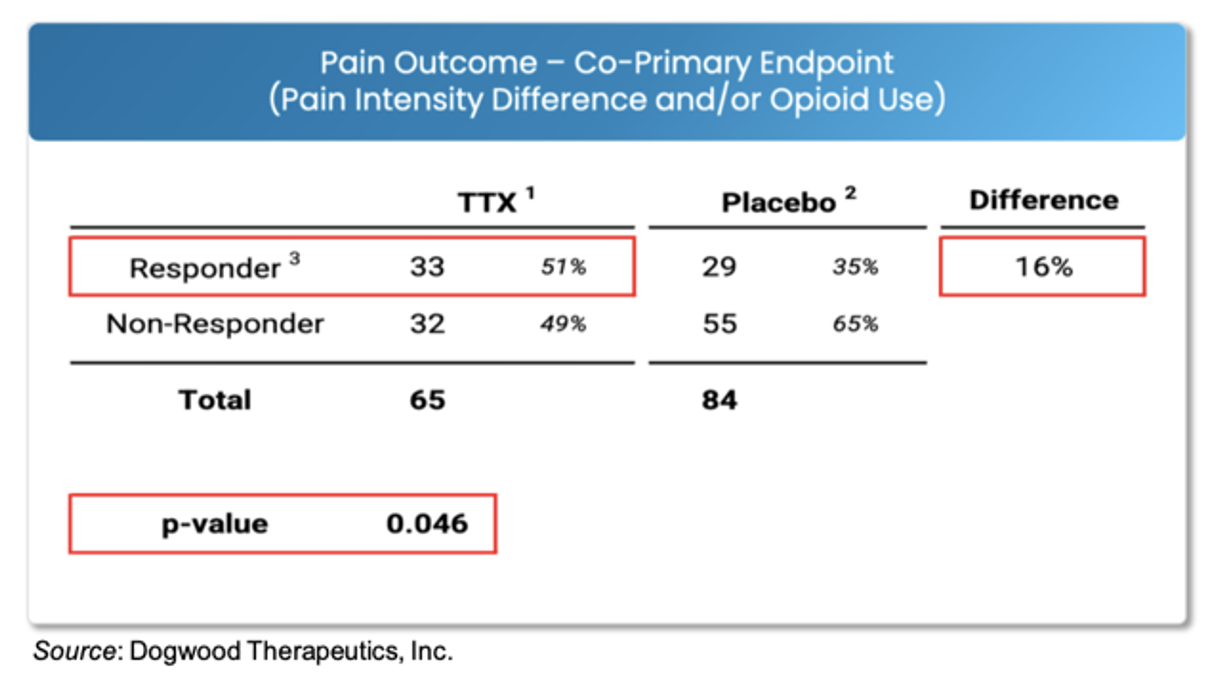
This was a randomized, double blind, parallel design, multicenter trial that enrolled 165 patients with moderate to severe inadequately controlled CRP. All patients were on standard of care pain management. Halneuron or placebo was administered twice a day for four days and all patients recorded their pain response from days 5-8 (early post-injection period) and from days 9-15 (late post-injection period). The results showed a statistically significant improvement in pain outcomes for Halneuron, with 51% of Halneuron patients experiencing a ≥30% reduction in pain compared to only 35% in the placebo group, as shown in the following image.
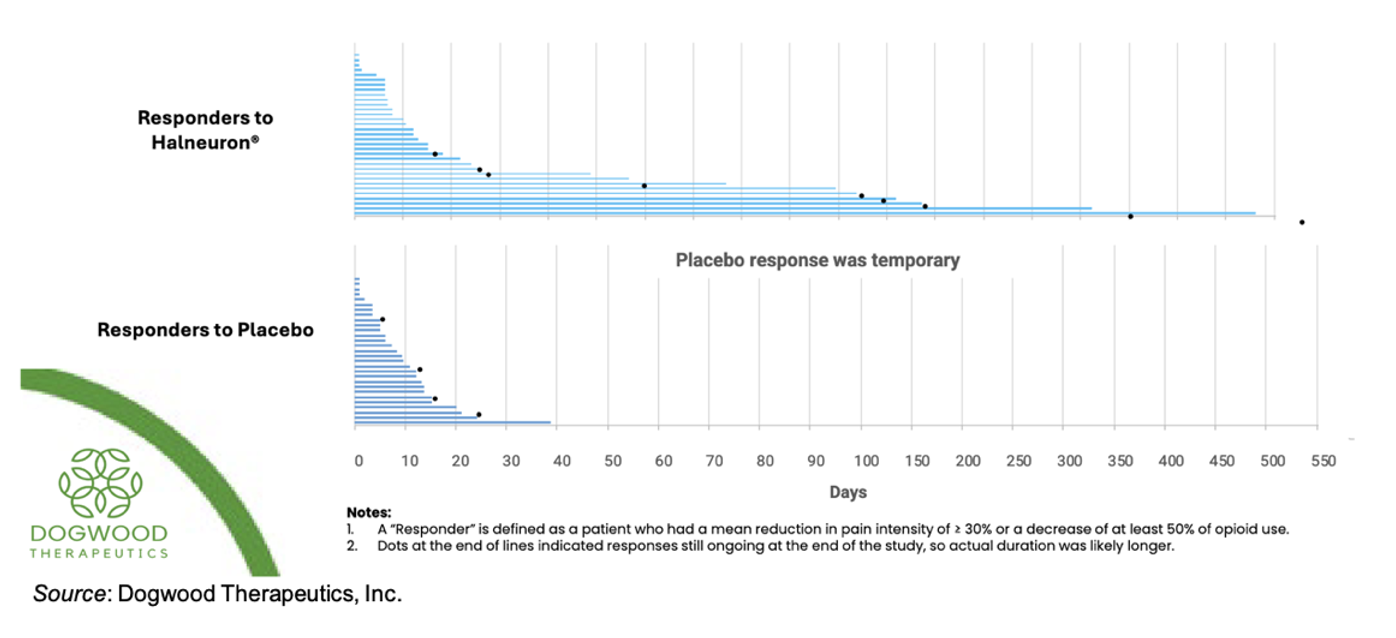
For Global Impression of Pain Change, 55% of Halneuron patients reported an improvement in pain compared to 24% of placebo patients. Conversely, 70% of placebo patients reported no change or worse pain compared to only 37% of patients. In addition to a positive pain response, the duration of pain relief was much higher for Halneuron patients, as shown in the following figure. The average pain response for Halneuron responders was 57.7 days compared to 10.5 days for placebo responders. Lastly, over one-quarter of Halneuron responders (27%) had pain relief that lasted for 30 days or longer after one cycle of treatment.
Phase 2 CINP Trial
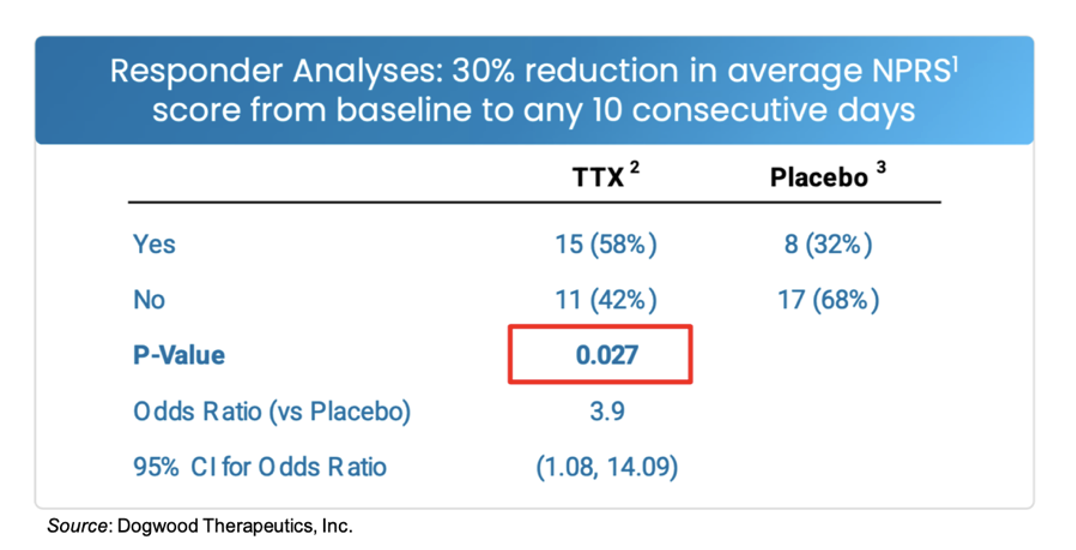
This was a randomized, double blind, dose-finding, placebo controlled, multicenter study in patients with CINP. Various doses of Halneuron were tested over four days of treatment followed by measurement over four weeks. The study included a total of 125 patients across five dosing cohorts (four active and one placebo). The results showed that a dose of 30 mg twice per day for four days demonstrated the highest level of pain reduction compared to placebo, with the responder analysis results given below.
Background on CINP
CINP is the result of injury to the somatosensory nervous system following chemotherapy treatment (Colvin, 2019). For agents such as paclitaxel and oxaliplatin, the rate of CINP is up to 81% and 98%, respectively (Hershman et al., 2010; Gebremedhn et al., 2018). CINP begins as an acute pain syndrome that coincides with drug administration, however it can progress to a chronic condition following multiple rounds of therapy.
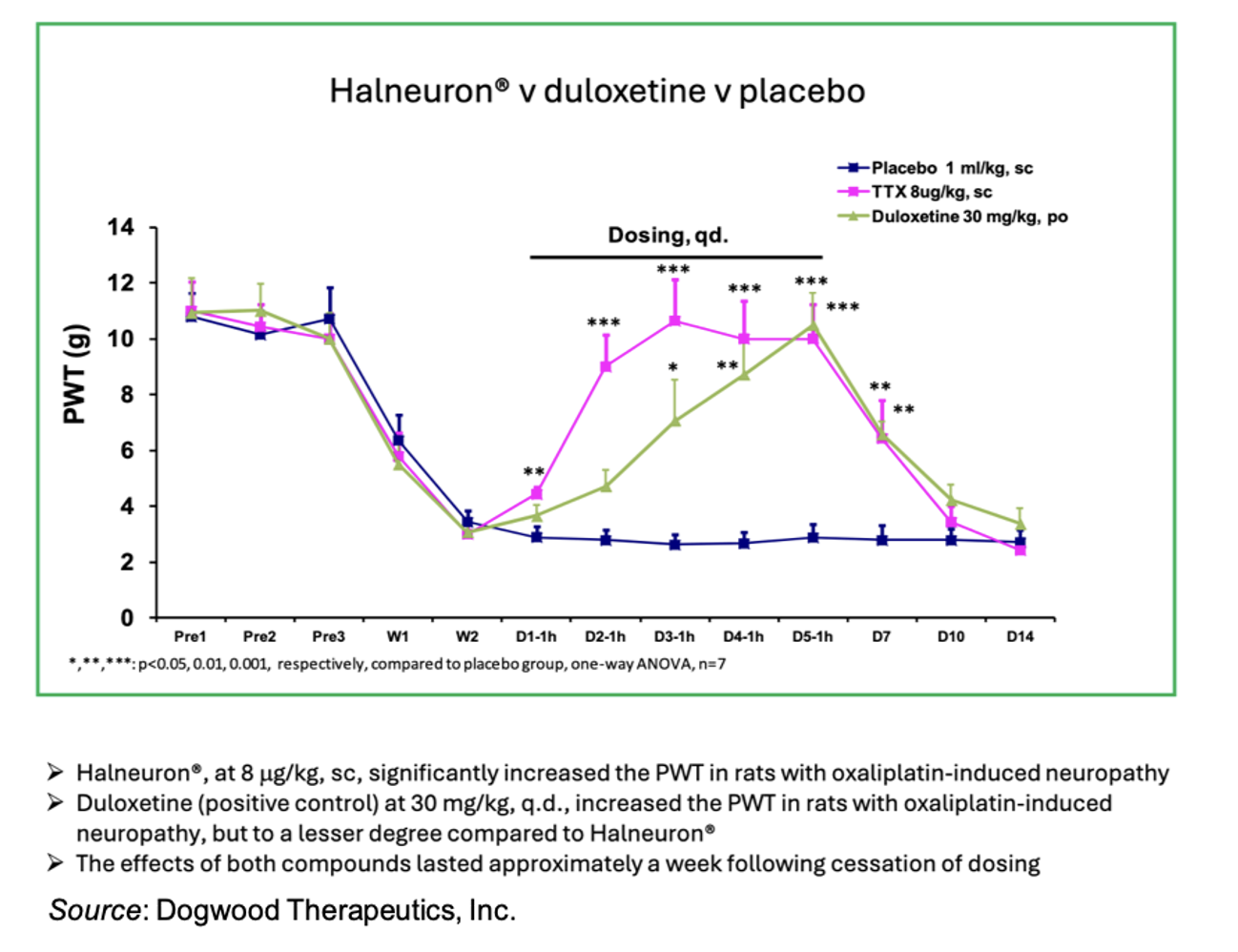
The only drug endorsed to treat CINP by the American Society of Clinical Oncology (ASCO) is duloxetine, which showed a significant reduction in pain in a Phase 3 clinical trial (Lavoie Smith et al., 2013). However, the drug is not FDA approved for the treatment of CINP. In addition, in a preclinical oxaliplatin-induced neuropathic pain model, Halneuron was superior to duloxetine based on the paw withdrawal threshold (PWT), a measure of pain tolerance.
There are an estimated 1.7 million CINP patients in the seven major markets (U.S., EU5, Japan). Opioids currently account for 30% of the global CINP market, which is estimated to be approximately $1.5 billion. The company also has plans to target CRP, which has a patient population approximately 7.5 times as large as CINP and a market worth approximately $5 billion.
Conclusion
The positive interim results from the Halneuron Phase 2b trial are very encouraging and we look forward to topline results in the third quarter of 2026. Based on these results we have increased the probability of success for Halneuron in our model, which has increased our valuation to $15 per share.
SUBSCRIBE TO ZACKS SMALL CAP RESEARCH to receive our articles and reports emailed directly to you each morning. Please visit our website for additional information on Zacks SCR.
DISCLOSURE: Zacks SCR has received compensation from the issuer directly, from an investment manager, or from an investor relations consulting firm, engaged by the issuer, for providing research coverage for a period of no less than one year. Research articles, as seen here, are part of the service Zacks SCR provides and Zacks SCR receives payments totaling a maximum fee of up to $50,000 annually for these services provided to or regarding the issuer. Full Disclaimer HERE.