
Nasus (NYSE: NSRX) reported topline results from its pharmacokinetic (PK) and pharmacodynamic (PD) Phase II study of NS002 on March 16th, 2026. This follows interim data reported in January demonstrating faster plasma absorption for NS002 compared with EpiPen. The final results compared Nasus’ intranasal epinephrine powder product with the intramuscular EpiPen autoinjector. The open-label Phase II study enrolled 50 healthy adults with a history of allergic rhinitis. Each participant received a single and repeat dose of NS002 and intramuscular EpiPen. NS002 subjects were also presented with a nasal allergic challenge (NAC). The study provided data supporting NS002’s clinical utility across multiple administration scenarios that patients may encounter during anaphylactic emergencies.
Along with the press release, management held a webcast to discuss results, accompanied by a slide deck. Participants on the call included CEO Dan Teleman, Chief Development Officer Dr. Dalia Megiddo and CFO Eyal Rubin.
NS002 demonstrated a faster time to target concentration of 1.69 minutes vs. EpiPen at 3.42 minutes. Time to peak concentration for NS002 was 15 minutes compared to 19.8 minutes for EpiPen. The clinical threshold for addressing anaphylaxis is blood plasma levels of 100 pg/mL of epinephrine. See below for a summary of key metrics.
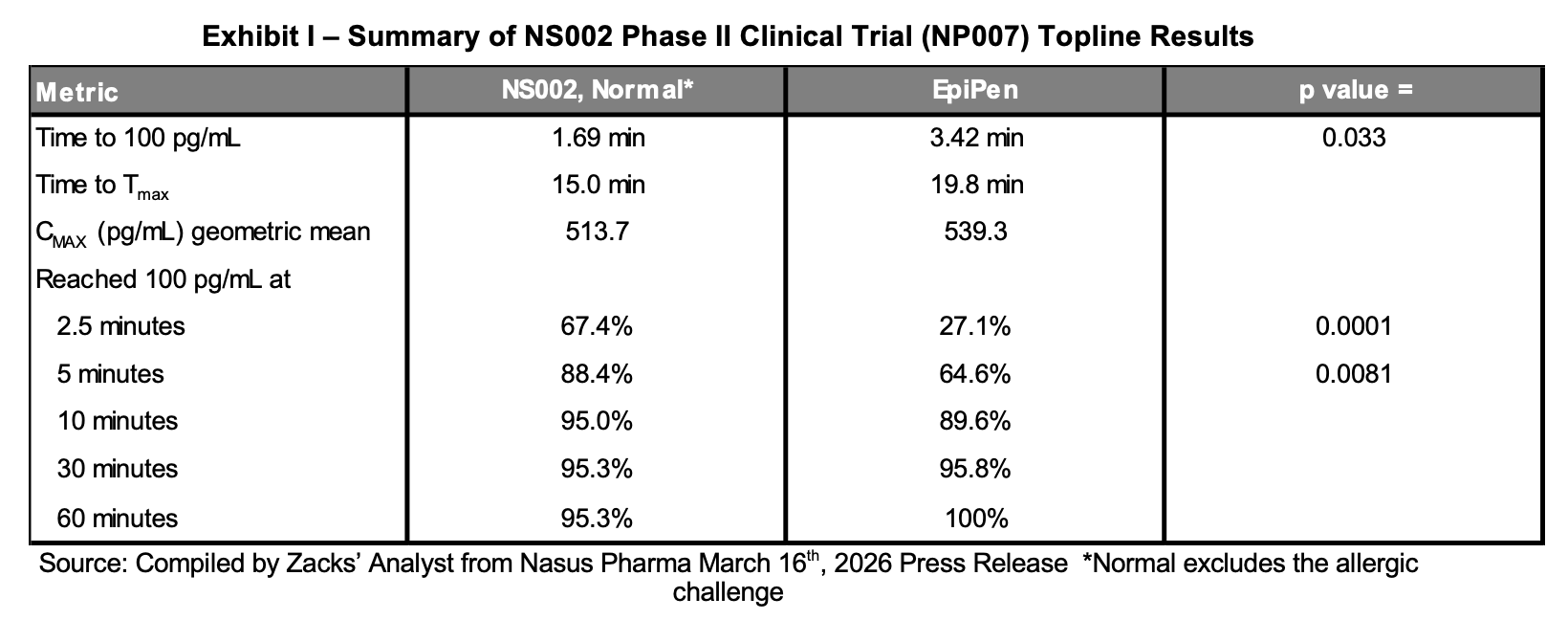
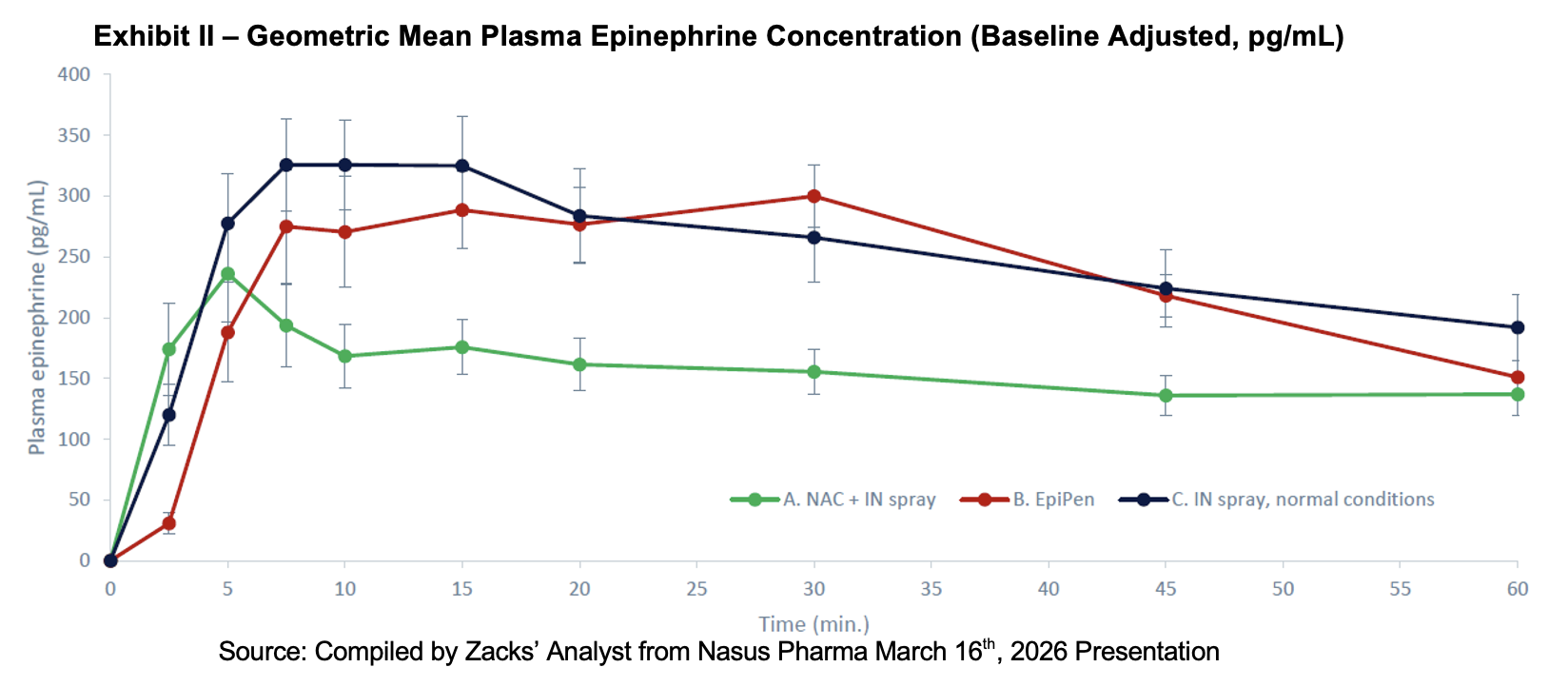
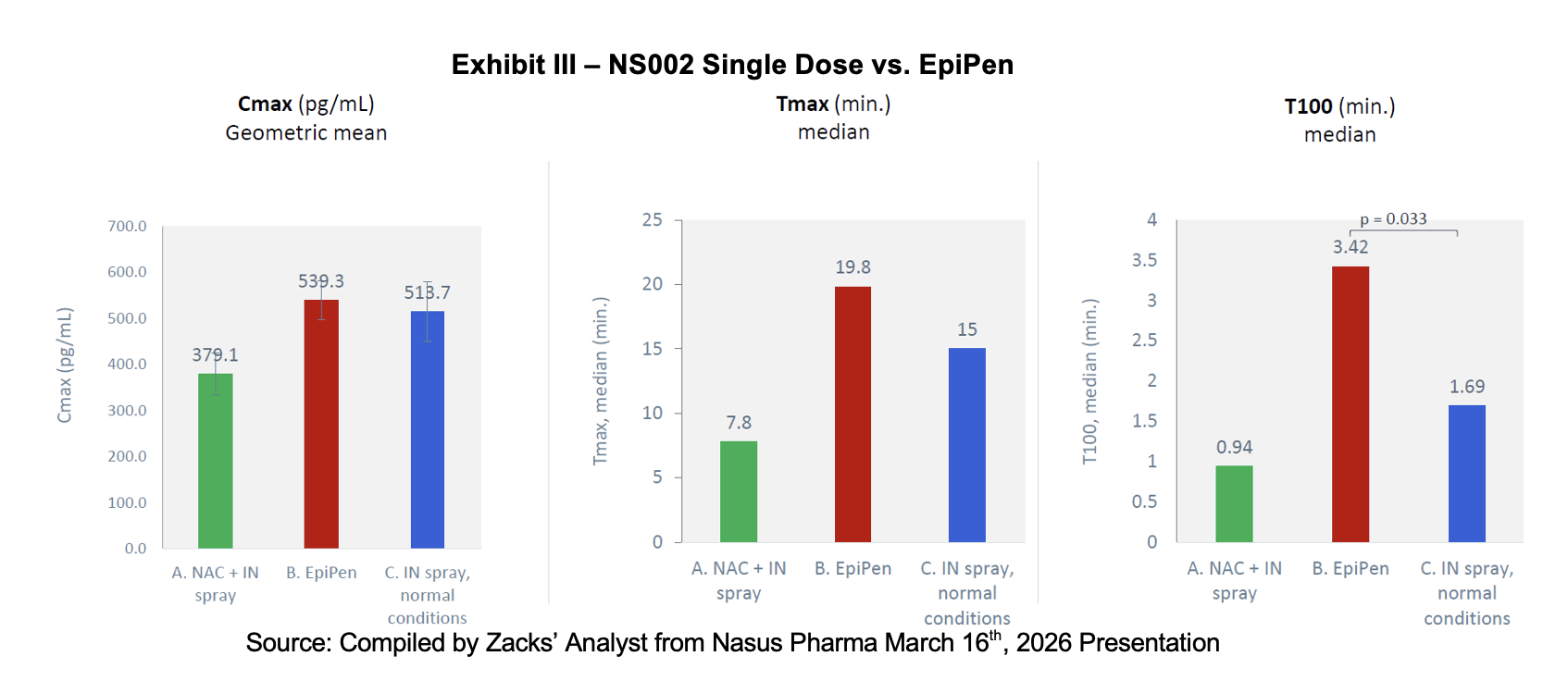

NS002 was well tolerated by all 50 subjects in the trial. No serious adverse events (SAEs) were reported and there were no cardiovascular AEs.[1] Most of the AEs were local and self-resolving and were 95% mild and 5% moderate. One participant discontinued due to eye pain.

NP007 Phase II Clinical Trial Design
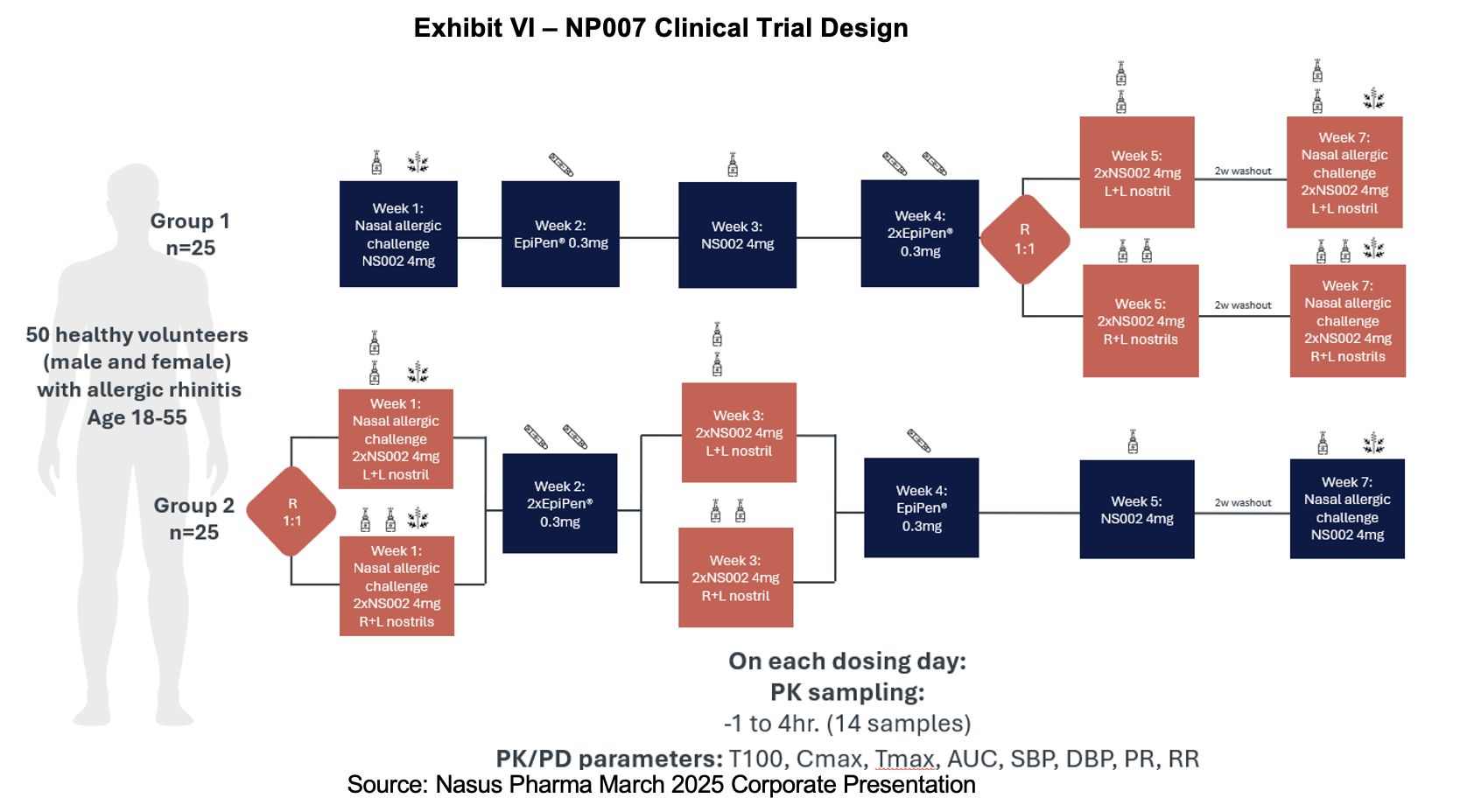
Nasus launched its Phase II PK and PD clinical study to evaluate intranasal epinephrine powder compared with EpiPen intramuscular autoinjector in 2025. The study, entitled Comparative PK/PD of FMXIN002 and EpiPen, in Healthy Adults With Allergic Rhinitis, was given the abbreviated designator NP007 and the Clinical Trials identification code NCT07228325. NP007 is evaluating a group of 50 healthy adults who have received single and repeat doses of both treatments under normal and nasal congestion conditions induced by nasal allergen challenge.
Inclusion criteria allow enrollment of non-smoking adults with documented positive skin allergy tests and a history of hay fever, seasonal allergies, or allergic rhinitis over the year prior to enrollment. The trial offered six interventions that were performed either in the same or opposite nostrils:
- One 4.0 mg dose of NS002
- One 0.3 mg EpiPen autoinjector dose
- One 4.0 mg dose of NS002 after nasal allergenic challenge (NAC)
- Two 0.3 mg EpiPen autoinjector doses, 10 minutes apart
- Two 4.0 mg doses of NS002, 10 minutes apart
- Two 4.0 mg doses of NS002 after NAC, 10 minutes apart
Endpoints included epinephrine level in plasma over time, TMAX, Time to 100 pg/mL, CMAX, Area Under the Curve (AUC), blood pressure, heart rate, and respiratory rate. Safety measures include adverse event rate at each treatment and severity. All subjects were evaluated at Pharma Medica Research Inc. in Mississauga, Canada.
Summary and Conclusions
The Phase II PK/PD study demonstrated that intranasal NS002 achieved target epinephrine plasma concentrations faster than the EpiPen autoinjector under multiple dosing conditions. Furthermore, a higher proportion of participants achieved the therapeutic epinephrine threshold of 100 pg/mL in the blood plasma at the critical 2.5-, 5-, and 10-minute time points in the NS002 group compared to EpiPen. NS002 was further well tolerated with transient mild symptoms, no serious adverse events, and no cardiovascular AEs. Based on these results, Nasus plans to launch its pivotal study in 4Q:26 and is expected to pursue the 505(b)(2) regulatory pathway with the FDA.
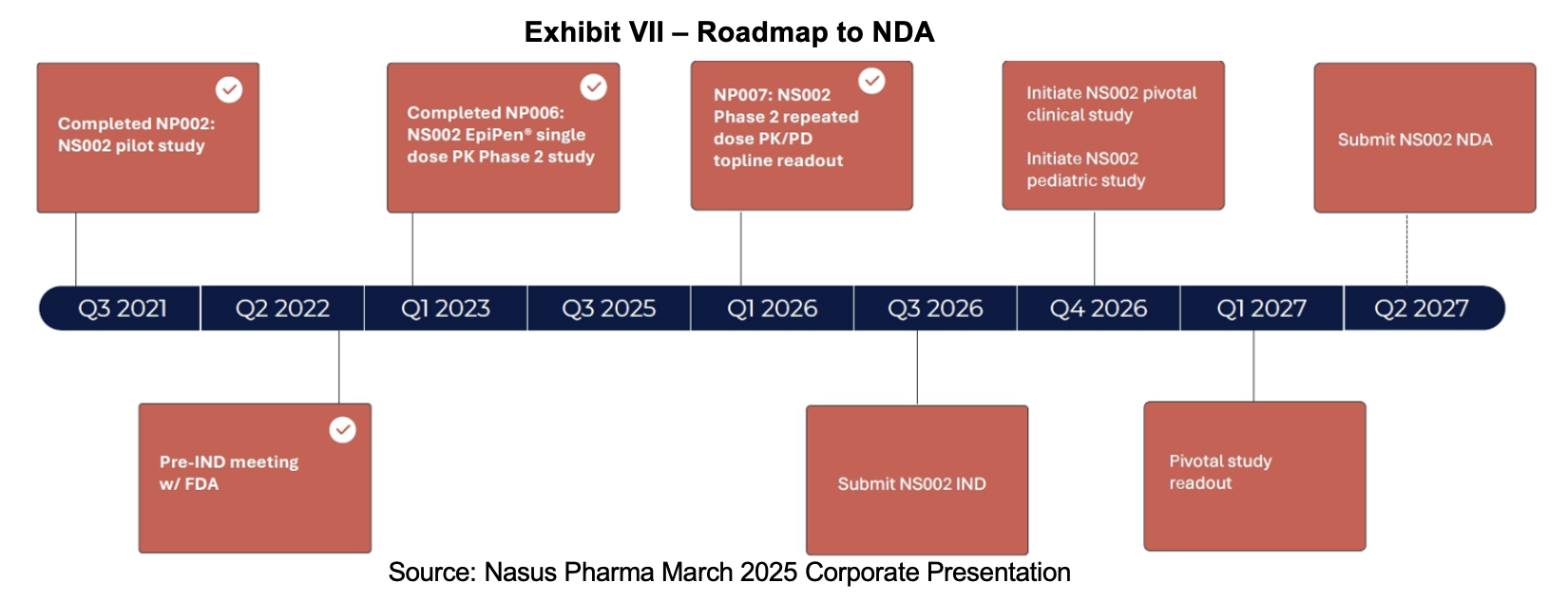
Next steps for Nasus are to submit an IND to the FDA and obtain clearance for an FDA-sanctioned pivotal study. The team will submit its proposed protocol to the agency and will make adjustments based on feedback. In parallel with this effort, management will secure sites for the study as well as select and engage a Contract Research Organization (CRO) to run it. Given the precedent with ARS Pharmaceuticals’ Neffy epinephrine nasal spray and its 2024 approval, the necessary steps are fresh in the minds of regulators.
Pivotal Study Expectations
Management believes that the pivotal study could enroll from 70 – 100 healthy subjects, depending upon regulatory feedback. The team anticipates three interventions, including NS002, EpiPen, and 0.5 mg of adrenaline, as per FDA precedent. In contrast with Phase II, only single-dose administrations are expected. The trial is planned to begin in 4Q:26 and generate topline data by 1Q:27, allowing for preparation of the New Drug Application (NDA) in time for 2Q:27 submission to the FDA.
Recent and Future Milestones:
- NP007 Phase II Interim Readout – March 2026
- NS002 Investigation New Drug (IND) submission – 3Q:26
- Target presentation at allergy and anaphylaxis conferences (AAAAI & ACAAI) – 2026/2027
- Publication of data in a respected journal – 2026/2027
- Launch NS002 pivotal study – 4Q:26
- Pivotal study readout – 1Q:27
- New Drug Application (NDA) submission to the FDA – 2Q:27
SUBSCRIBE TO ZACKS SMALL CAP RESEARCH to receive our articles and reports emailed directly to you each morning. Please visit our website for additional information on Zacks SCR.
DISCLOSURE: Zacks SCR has received compensation from the issuer directly, from an investment manager, or from an investor relations consulting firm, engaged by the issuer, for providing research coverage for a period of no less than one year. Research articles, as seen here, are part of the service Zacks SCR provides and Zacks SCR receives payments totaling a maximum fee of up to $50,000 annually for these services provided to or regarding the issuer. Full Disclaimer HERE.
________________________
[1] EpiPen’s label discusses cardiovascular reactions including arrhythmias and fatal ventricular fibrillation in patients with underlying cardiac disease or those receiving certain drugs. Other events include rapid rises in blood pressure have produced cerebral hemorrhage, particularly in elderly patients with cardiovascular disease and angina may occur in patients with coronary artery disease. Investigators have reported rare cases of stress cardiomyopathy in patients treated with epinephrine.