
By M. Marin
READ THE FULL HIT RESEARCH REPORT
Rising healthcare costs underscore need to secure affordable healthcare coverage
Health in Tech (NASDAQ:HIT), an insurance marketplace leveraging AI technology, is optimistic about the traction it is seeing as it continues to engage with new and existing customers, extend its target market as it broadens its solutions offerings, and expand its reach as it adds brokers and forms new relationships.
The focus on affordable healthcare access as costs rise creates a positive tailwind, we believe, for the company’s growing portfolio of solutions. HIT continues to offer solutions to lower costs and complexities around securing affordable healthcare. According to the KFF Employer Health Benefits Survey, 2025, annual premiums for employer-sponsored family health coverage increased 6% year-over-year in 2025.
HIT is leveraging its technology platform to introduce innovations and expand the range of affordable solutions it offers. In addition, last month HIT named Zain Hasan as Chief Growth Officer to help accelerate its revenue growth. He has more than 15 years of experience in the employee benefits and insurance industry and joined Health In Tech in September 2025, and will be responsible for revenue generation and performance across sales, distributions, partnerships, and revenue operations in his new role as Chief Growth Officer.
Even before the appointment of Mr. Hasan, the company had been expanding its network and reach, and we expect this initiative to accelerate with a new Chief Growth Officer in place. Specifically, HIT’s 3Q25 distribution network expanded to 849 partners, up 57% year-over-year, reflecting the company’s strategy to extend the network beyond traditional broker channels, according to management, including partnerships with Third-party Administrators (TPAs), regional healthcare benefit providers, and service platforms supporting small businesses.
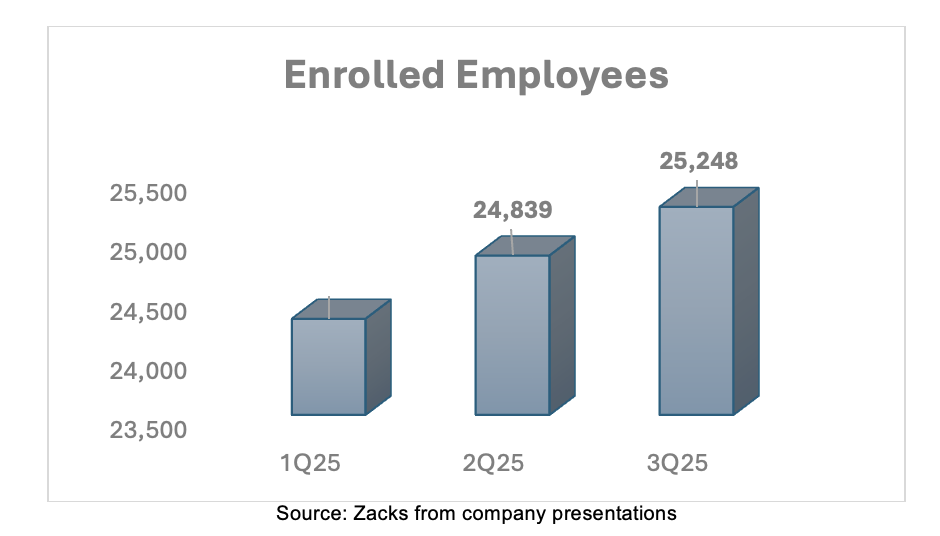
As HIT expands its network and adds the number of enrolled employees (EEs) insured via its platform, revenue growth is highly correlated with EE expansion. The number of EEs insured via its platform, therefore, is considered a critical indicator of growth and market penetration. The company bills service fees per EE on a monthly basis. In 3Q25, the company’s platform had 25,248 EEs billed for various services, up from 24,839 at the end of the prior quarter and up more than 40% compared to 3Q24. Notably, HIT’s 3Q25 revenue grew 90% year-over-year to $8.5 million, and cumulative revenue of $25.8 million in the first 9 months of 2025 exceeded total full-year 2024 revenue of $19.5 million. The company believes the increase in billed EEs reflects that HIT is expanding its market reach and seeing strong adoption across its growing network.
HIT expanding target addressable market &introducing new solutions, including for larger employers
While the company indicated that it is extremely encouraged by the traction it is seeing among large-employers, HIT continues to expand its offerings and reach for SMEs (the small and medium-sized enterprises), its legacy target addressable market (TAM). The majority of U.S. firms fall into this category, according to the U.S. Small Business Association (SBA). The company believes the HIT platform can also make it easier for larger organizations to obtain insurance plans that are appropriate for their organizations. Reflecting interest it has generated to-date, HIT is optimistic about the prospects for its AI-powered solutions for businesses of all sizes.
The self-funded healthcare landscape
Health in Tech operates an online marketplace designed to make it easier for small businesses to obtain affordable self-funded benefits plans and stop loss insurance. Self-funded benefits plans have traditionally been out of reach for small/medium businesses. until relatively recently, self-funded benefits plans have generally been designed primarily for large corporations.
The company also believes that many TPAs, brokers and MGUs avoid selling stop loss insurance for self-funded benefits plans, reflecting the complexity of navigating and difficulty of closing the sales process. The company offers SMBs tools to create and support self-funded benefits plans and believes its solutions can help smaller businesses avoid many of the challenges in order to access cost effective health care plans.
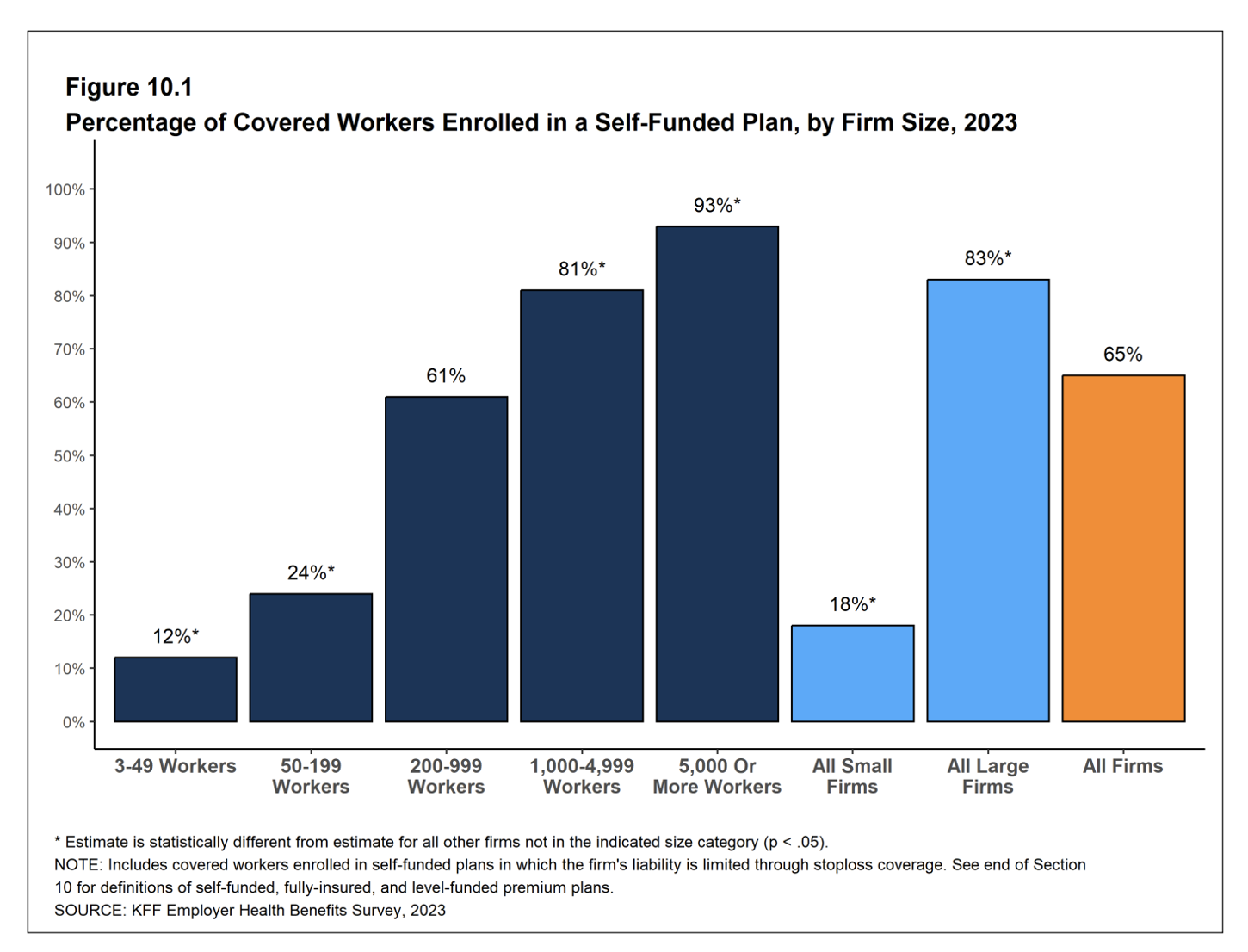
According to KKF, “Many firms, particularly larger firms, choose to pay for some or all of the health services of their workers directly from their own funds rather than by purchasing health insurance for them. This is called self-funding… Self-funding is common among larger firms because they can spread the risk of costly claims over a large number of workers and dependents.” Many employers that sponsor self-funded plans also have stop-loss coverage in order to limit their liabilities, according to industry sources.
HIT recently expanded its stop-loss self-funded healthcare plan offerings to deliver 100+ pre-configured, customized stop-loss healthcare programs. This increases the offerings and options brokers can provide to employers, including the flexibility to further customize plans when employers require specific changes, and supports shorter sales cycles and scalable distribution.
The company also formed a strategic collaboration with Benefit Re, a fast-growing insurance carrier providing both healthcare and property & casualty (P&C) insurance, to enhance brokers’ ability to offer healthcare solutions for employers and improve speed-to-market and scalability across its distribution network. According to HIT, Benefit Re has a 3-year 85% employer retention rate, reflecting its alignment between internal pricing discipline and risk management with employers’ long-term needs. The company views this relationship as creating opportunities for it to expand into the P&C category down the road.
SUBSCRIBE TO ZACKS SMALL CAP RESEARCH to receive our articles and reports emailed directly to you each morning. Please visit our website for additional information on Zacks SCR.
DISCLOSURE: Zacks SCR has received compensation from the issuer directly, from an investment manager, or from an investor relations consulting firm, engaged by the issuer, for providing research coverage for a period of no less than one year. Research articles, as seen here, are part of the service Zacks SCR provides and Zacks SCR receives payments totaling a maximum fee of up to $50,000 annually for these services provided to or regarding the issuer. Full Disclaimer HERE.